Mustang and the Lost Footage
I lost 80% of the clips I loved most from Mustang. What I didn't expect was what that loss would teach me.
The drive into Mustang begins somewhere after Kagbeni, where the road narrows and the valley opens into something that doesn't feel entirely real. The cliffs are ochre and rust and a pale kind of lavender that I don't have a good word for. The wind is constant — not strong enough to knock you over, just present enough that you're always aware of it, like a companion that never speaks.
I had my phone out the whole way. I had my camera out. I was filming everything.
It wasn't all of it. I want to be precise about that. I didn't lose everything — but I lost the ones that mattered most. The 80% I had replayed in my head on the drive home. The ochre cliffs at dusk. The prayer flags snapping in the wind above Kagbeni. A moment where the light went golden and strange for about four minutes and I knew even while it was happening that I would want this back later.
Gone. A corrupted folder. Files that opened as static.
The first feeling was the obvious one. A sick dropping in the stomach. Something between grief and stupidity — grief for the footage, stupidity for not backing it up sooner.
But then, sitting with it for a few days, I started to notice something else.
I remembered Mustang more clearly than any place I'd brought footage home from.
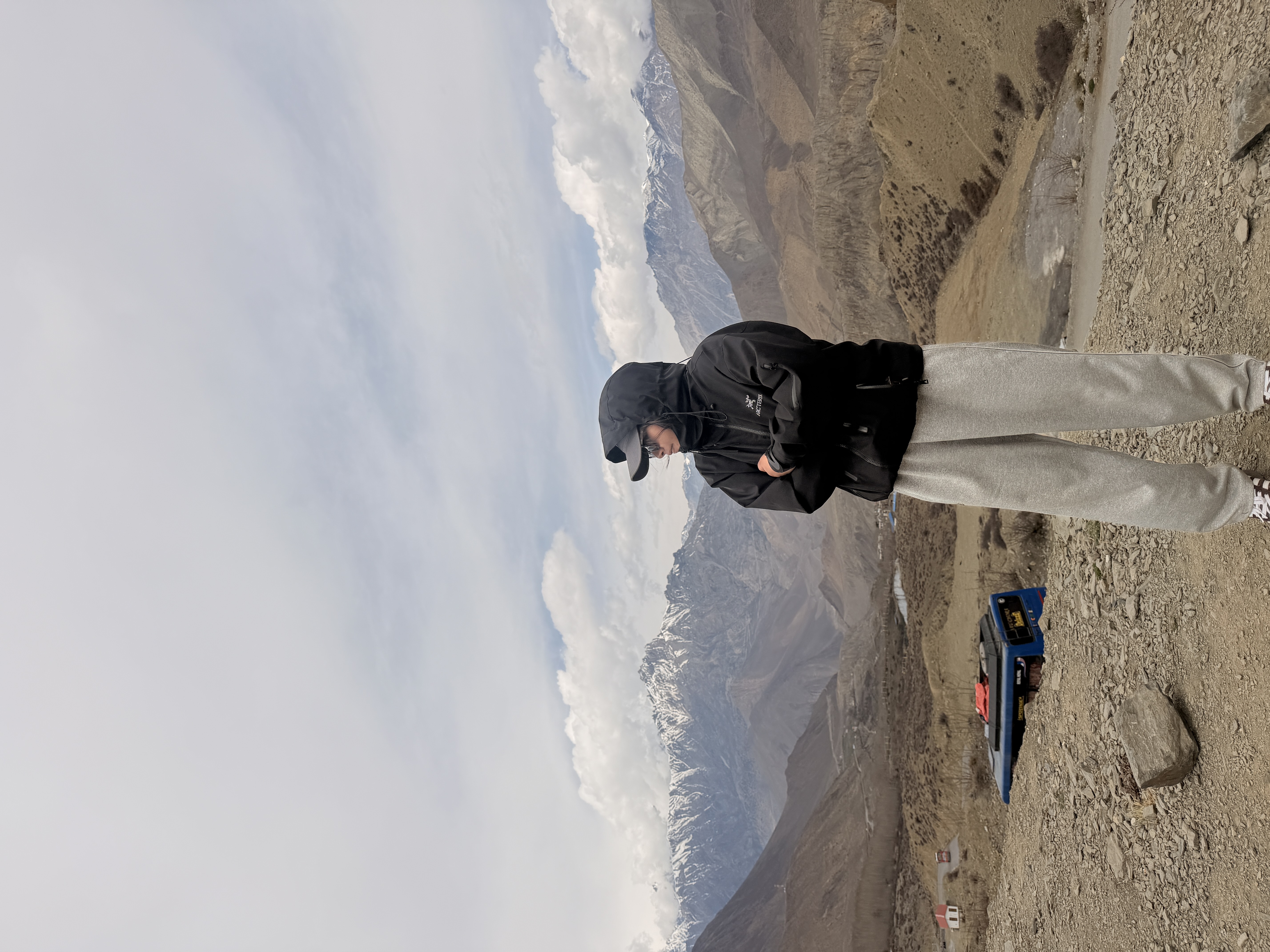
I remember the exact quality of the light at Kagbeni in the late afternoon. The way it hit the white walls of the buildings and made them look warm instead of white. I remember standing somewhere up high with the whole valley below me, arms crossed against the cold, not filming anything — just standing there because there was nothing else to do.
I remember thinking, while I was filming the other moments, that I needed to get this. Get the light, get the movement, get it into my phone so I could keep it. And I was so focused on getting it that I was standing slightly outside the experience. Watching it through a screen instead of with my eyes.
The clips I lost were the ones I was most present for in theory — the ones I knew were beautiful while they were happening. But I was present for them as a filmmaker, not as a person. The ones I kept are the ones I almost didn't bother to film.
There's a guesthouse I remember stopping at. Somewhere before we reached the higher elevations. Red walls the color of dried chilies, a woven blanket thrown over a wooden chair, pine branches on the floor. Snow visible through an old window. It smelled like woodsmoke and something faintly sweet.
I don't think I filmed it at all. I just sat there for a while.
That room is clearer to me now than most of the footage I have.
I'm not trying to make a case against cameras or phones. I'm not going to leave mine at home next time.
But I think about the footage I didn't take — the moments where I put the phone down and just stood there — and those are the ones with the most texture now. The ones I can still feel the temperature of.
Mustang taught me something I didn't go there to learn: that the point of being somewhere isn't to prove you were there. It's just to be there. Fully. Even if you can't show anyone afterward.
The clips I lost were beautiful. But maybe they were always meant to stay in Mustang.
The trip was in early 2026. I went with my family we kept stopping to pray at roadside shrines, which added about three hours to every journey and which I now think was the right call.
If you liked this
On Saying Less
We treat speech as the proof of presence. But sometimes the most attentive thing in a room is the person who hasn't said anything yet.
The Light at Four
There is an hour in Kathmandu, late in the afternoon, when the light goes thin and gold and the whole city seems to remember something.
Words That Don't Translate
Some of the things I want to say in English have no shape in English. They were born in another language and they refuse to leave it.